AI Companies Call for Slower Development—But Won't Do It Themselves
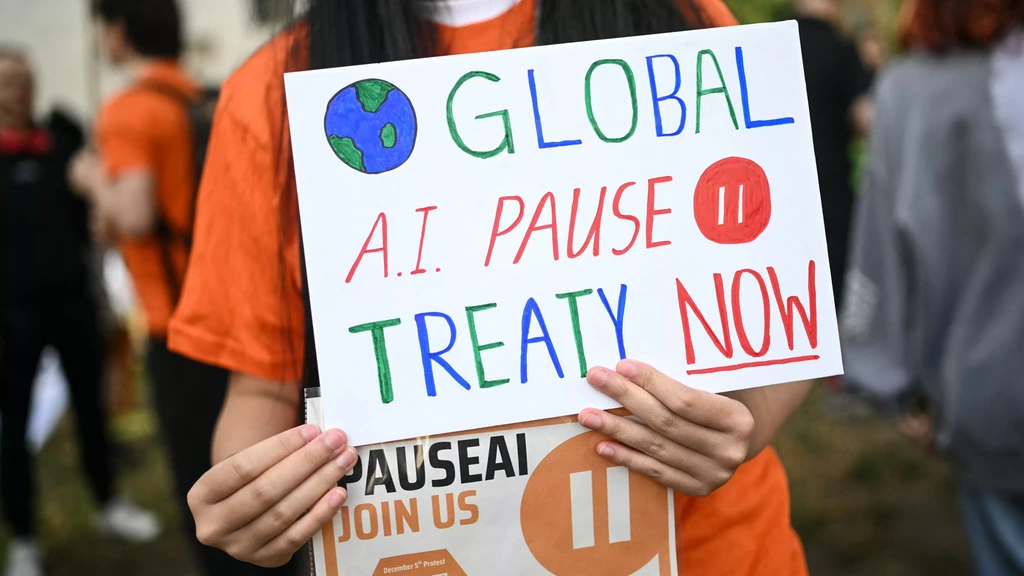
Leaders of major AI companies are asking governments to force the industry to slow down, citing safety concerns. Critics say: if you're truly worried, just stop—you don't need permission.
On Saturday, Dario Amodei, the head of AI company Anthropic, published an article arguing that the world's leading AI developers should release new, powerful AI models more slowly. He says government support is needed to make this happen. Other AI leaders, including Sam Altman (who runs OpenAI, maker of ChatGPT) and Elon Musk, agreed with him.
Amodei's main concern: artificial intelligence—computer software that can learn and make decisions without being explicitly programmed for each task—might become powerful enough within six to twelve months to "take over the entire internet." He's asking for new rules to prevent this. But here's the problem: he doesn't explain how this would happen, why people wouldn't notice it, or what an "internet takeover" would even look like.
Critics, including computer science professor Felienne Hermans from Amsterdam's Vrije Universiteit, are calling out what they see as hypocrisy. "If you're truly worried, you can just stop," Hermans points out. "You don't need government permission to decide your own company won't release something." Facebook founder Mark Zuckerberg made a similar point: Meta delayed releasing its latest AI model for a few months to focus on safety—without asking the government, without waiting for other companies to do the same, and without announcing it as a grand moral stand.
Experts suspect the real motivation might be different. Chinese AI companies are releasing cheaper or free versions of similar technology, creating serious competition for American companies like Anthropic and OpenAI. New government rules could slow down Chinese competition while these American companies keep their existing investments profitable. As researcher Roel Dobbe from Delft University of Technology notes, these companies have plenty of money to influence how regulations are written—making sure the rules benefit them. If something does go wrong later, the companies can say: "We asked the government for rules, but they didn't act," shifting blame away from themselves.
Original source: NOS Nieuws Tech