AI Helps Design Materials That Control Light in New Ways
Scientists used artificial intelligence to create special materials that can bend and direct light across different wavelengths. This breakthrough could lead to better cameras, sensors, and communication devices.
Researchers have discovered a new way to design materials that can control how light travels through them. They used artificial intelligence — specifically, a type of AI that learns patterns from data — to guide the design of these special layered materials.
Think of it like this: light comes in different forms, from the visible light we see with our eyes to invisible infrared light (the heat we feel) and terahertz radiation (used in some scanners). These new materials can direct and control light in all these different forms, almost like creating invisible highways for light to travel down specific paths. This property is called "polariton canalization," which simply means guiding light in a controlled direction.
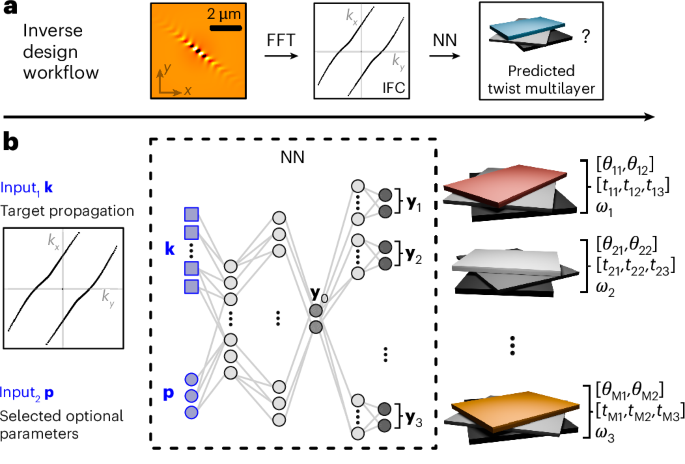
What makes this special is that scientists didn't have to randomly experiment for months. Instead, they trained an AI system to understand how different material structures affect light behavior. The AI then suggested better designs automatically. It's similar to how a recommendation system learns what you like — except here it's learning what material structures work best for controlling light.
Why should you care? Better control of light could mean sharper cameras, more sensitive sensors that detect tiny amounts of heat or light, and improved devices for sending information wirelessly. This research shows how AI isn't just for chatbots or images — it's becoming a powerful tool for scientists designing the materials and technologies of the future.
Original source: Nature.com