Teaching AI to Disagree Helps Scientists Understand How Brains Work
Scientists are using a clever trick: making artificial intelligence models deliberately disagree with each other to learn how the human brain actually processes information. This approach could unlock new discoveries about thinking itself.
How Do Brains Actually Think?
For decades, scientists have been puzzled by a fundamental question: how does the human brain process information and make decisions? To study this, researchers build artificial intelligence models—software that learns patterns from data, similar to how our brains learn from experience. But here's the problem: these AI models are so flexible and powerful (they can adjust trillions of internal settings) that it becomes nearly impossible to tell if they're actually mimicking how real brains work, or just finding a completely different way to solve the same problem.
A New Idea: Make Models Disagree
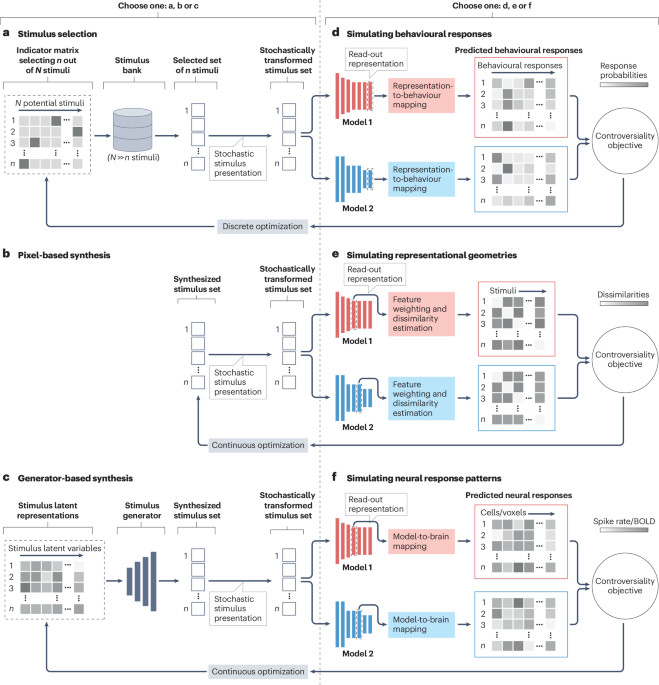
In a new approach, scientists led by Nikolaus Kriegeskorte are trying something counterintuitive: instead of building one perfect AI model, they deliberately create models that disagree with each other. Think of it like asking five doctors with different backgrounds to diagnose a patient. If they all reach the same conclusion using different reasoning, that conclusion is probably correct. But if they disagree, that disagreement itself tells you something valuable.
By comparing how different AI models solve the same problems—and studying where and why they diverge—researchers can narrow down which solutions are most likely to match how actual brains work. It's like using the disagreement as a magnifying glass to spot the truth.
Why This Matters
Understanding how brains compute isn't just academic curiosity. Better brain models could lead to treatments for brain disorders, more effective education techniques, and AI systems that are safer and more aligned with human reasoning. By making AI models disagree deliberately, scientists gain a powerful new tool for unlocking one of nature's greatest mysteries: how we think.
Original source: Nature.com